Discourse
From Humanism to Post-Humanism
To understand post-humanism, it helps to first examine what it seeks to move beyond. Humanism, a term with Renaissance roots, is less a doctrine than a constellation of beliefs. Chief among them is an unwavering faith in human exceptionalism: that our species occupies a singular place at the apex of moral and intellectual life.
This belief emerged in stark contrast to the religious dogma and superstition that dominated Medieval Europe. By championing reason and individual autonomy, humanism wrested the narrative of human destiny from divine providence and placed it squarely in human hands—though, tellingly, those hands were almost exclusively white and male. The legacy of this anthropocentric worldview endures in our political systems, legal frameworks, and cultural institutions, which continue to prioritize humanity above all else.
Post-humanism, which began taking shape in the late 20th century, questions the permanence of this human-centered perspective. It argues that as our tools grow more sophisticated and our understanding of the world more nuanced, the idea of humanity as the sole moral arbiter begins to fray.
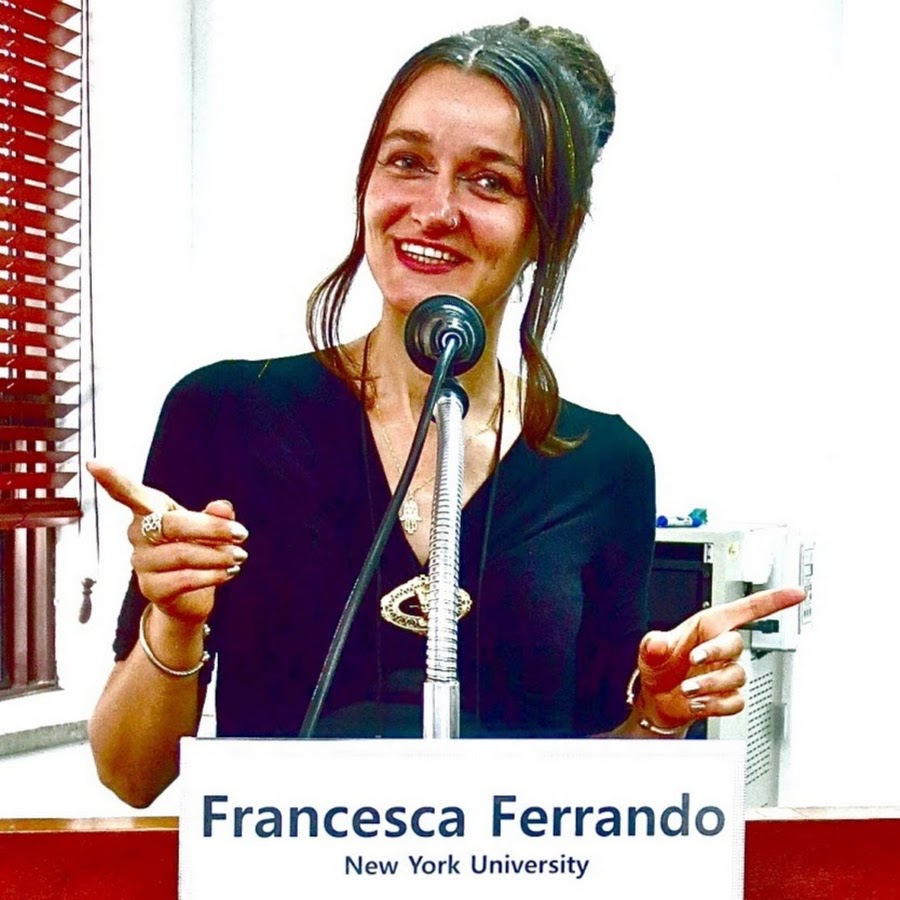
Philosopher Francesca Ferrando, a leading voice in the field, frames post-humanism as a necessary evolution in ethical thinking. She contends that the challenges of the 21st century—climate change, artificial intelligence, and the erosion of biodiversity—demand a broader moral lens, one that accounts for the agency and value of non-human entities. For Ferrando, post-humanism is not about discarding humanity but about decentering it, making space for the multiplicity of beings and systems that co-constitute our world.
Two Paths to the Post-Human
Among post-humanists, there are two dominant visions of what comes next. The first, often conflated with transhumanism, imagines a future in which humanity transcends its biological limits through technology. Advocates like Ray Kurzweil, a chief engineer at Google, foresee a world where implants, genetic engineering, and artificial intelligence radically alter the human condition. In Kurzweil’s telling, technological progress follows an exponential curve, culminating in a moment of singularity—a leap into a post-human existence so transformative it defies current comprehension.
This vision is heady, seductive, and distinctly Silicon Valley. It promises not just longer lives but smarter, stronger, and perhaps even immortal ones. Yet it is also deeply individualistic, a techno-utopian dream that prioritizes the enhancement of human capabilities without necessarily interrogating the broader ethical or ecological implications.
The second vision, articulated by thinkers like Donna Haraway and Ferrando, is less concerned with transcendence than with entanglement. Haraway’s seminal work, A Cyborg Manifesto, argues that as humans increasingly integrate with machines, we must reconsider the oppositions—natural versus artificial, human versus non-human—that have long defined our understanding of the world.
For Haraway, the cyborg is a metaphor for breaking down these binaries. To see ourselves as part human, part machine is to acknowledge the fluidity of our identities and relationships. This perspective extends beyond humans, challenging us to rethink our connections to animals, ecosystems, and even the inanimate systems that shape our lives.
Ferrando amplifies this argument by proposing what she calls a "planetary ethics." This framework dissolves the artificial boundaries between species, technologies, and environments, urging us to recognize the interdependence of all forms of life—biological, mechanical, and otherwise. It’s a call to humility, a reminder that our survival is inextricably linked to the survival of others.
Rethinking the Moral Order
Where Kurzweil sees post-humanism as a technological destiny, Haraway and Ferrando see it as an ethical imperative. Haraway describes a post-human future as a time “when species meet,” a moment of reckoning in which humans finally make room for the non-human within their moral universe. Ferrando takes this further, arguing for a decentered ethics that considers the rights and interests of all agents—living, artificial, and ecological.
Post-humanism, then, is not merely a vision of what we might become but a challenge to how we think about ourselves and our place in the world. It asks us to abandon the narcissism of human exceptionalism and to embrace a more expansive, inclusive understanding of agency and value.
In this light, Sophia’s citizenship is less a herald of robotic revolution than a symbolic crack in the edifice of human-centric thinking. The question is not whether robots will rise, but whether we are ready to rise to the ethical challenges of a post-human world.